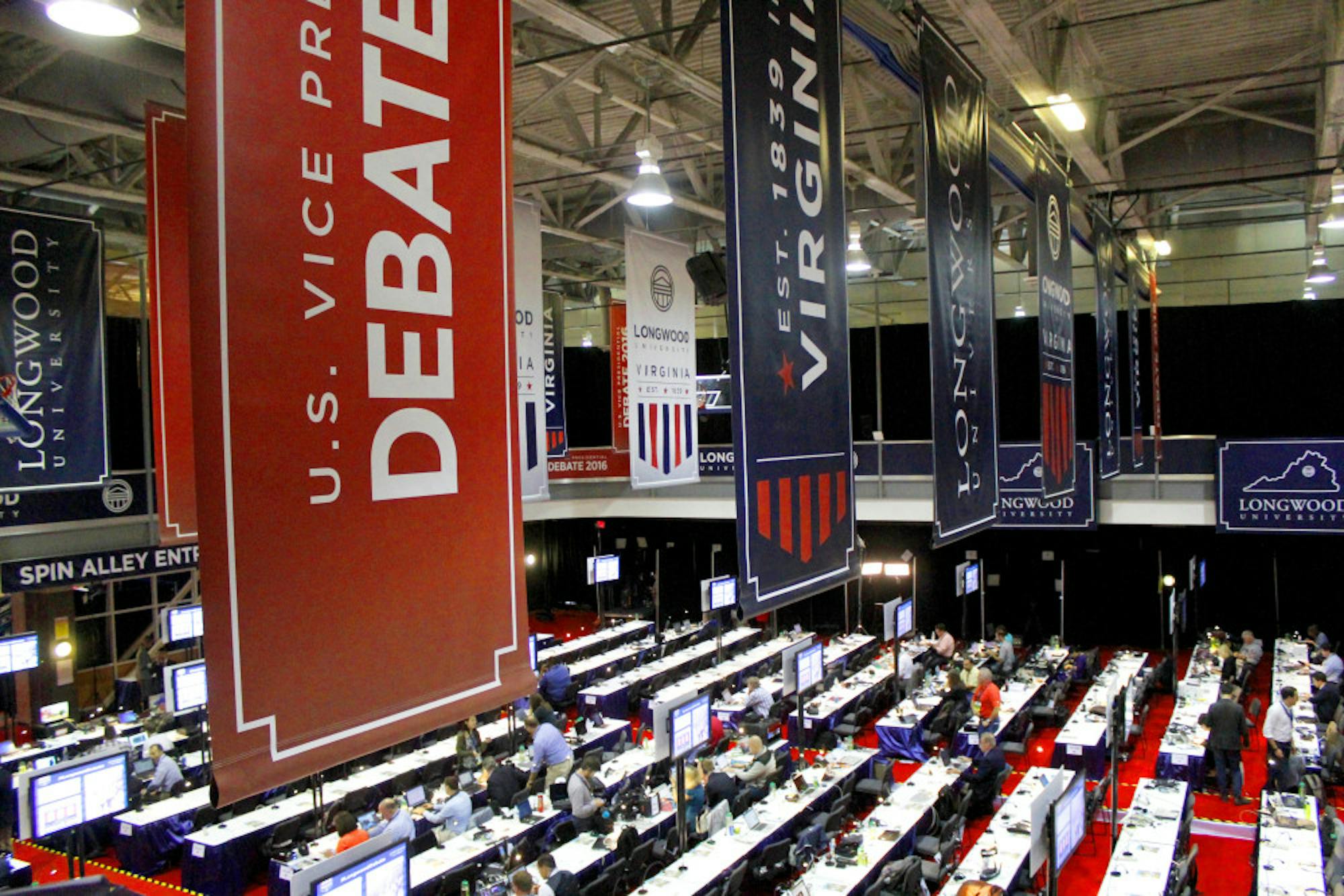
On Oct. 4, 2016, the Vice Presidential Debate was hosted at Longwood University. In preparation for the debate, much construction was completed, as well as IT infrastructure improvements. The university also had many classes related to the debate with hopes of leaving a lasting impact on the curriculum. Additionally, the university hopes to have an increase in applications from the media attention.
“There are a number of projects that were part of the campus master plan that were finished last year,” said . “We (Longwood) saw the opportunity to go ahead get done, before the debate so the campus would be really improved. The new gateway to Brock Commons, the new façade on the front of Willett Hall, and then finally, the really interesting one is the passageway between Willett (Hall) and where the tennis courts were, that connects Curry and Frazer (Halls) and Brock Commons.”
“Our sense of place, our beautiful campus has been improved tremendously. There are a number of projects we were able to expedite.” said Louise Waller, executive director of campus planning and construction.
As far as meeting the technical demands of the debate, the technical infrastructure and internet capabilities have been improved. Broadband internet has been improved, and miles of new cable have been laid, according to Pope.
“We definitely have improved many facets of the IT infrastructure … we have definitely upgraded and just generally the strength and resilience of the network. We’ve connected a number of new buildings with really powerful broadband, that makes it safer,” said Pope.
Longwood is a small school and plans to stay one, according to Pope, in regard to if Longwood plans to increase the student body size in the upcoming years.
“We hope to see more applications, our plan for the size of Longwood is not any different than it was before we put our name in the hat. (President W. Taylor) Reveley (IV) is doing this to strengthen Longwood is as opposed to turn it into something new. I hope in a couple years we will have more applications, but Longwood is not going to be much different in than it is today,” said Pope.
After hosting a debate in 2008, Hofstra University experienced a 20 percent rise in applications, according to Within the past year, Longwood has had an 11 percent increase in applications.
“The important thing is Longwood is in the process now, over the a couple of years, of changing its general education curriculum. We’re really trying to create something special that’s focused of citizen leadership. So yes, absolutely, there’s going to be a legacy in the curriculum here. I don’t think it means the selection of courses is going to be more political, but it definitely is going to be focused on the tools of citizenship.” said Pope.
“All the faculty and staff I worked on the debate have a much deeper appreciation of our political process.” Waller said. “I think the university handled it well from an academic standpoint.”
Other institutions which have hosted the VP debate felt have released similar statements.
“Giving students a front row seat and participatory role in the American Process…it’s an educational experience,” said John A. Roush, the president of Centre College, in 2015. Centre College hosted the 2008 VP debate. Centre College has not, however, had a population increase.
“We’ve received a tremendous amount of media attention... Longwood couldn’t of looked better, I think that’s a dramatic immediate impact,” said Waller.

Longwood University said it viewed hosting the vice presidential debate as a long-term investment, budgeting over $5 million toward festivities and construction. The debate brought over 2,000 reporters and 37 million viewers.