For the fall semester, the Graduate Student Association (GSA) will receive a lump sum of $7,514 after the Student Government Association (SGA) passed a bill allowing the GSA to receive funds every semester towards activities for graduate students.
The amount of money the GSA, previously called Graduate Student Association Council (GSAC), will receive from the Student Finance Committee (SFC) biannually is based on the number of graduate students enrolled per semester. The SGA approved the bill for the GSA on Aug. 30 following in-depth discussion, then the SFC formally passed the bill Sept. 8.
“This bill gives us (GSA) more say into the graduate student activity fee which we pay into, and it also allows for us to create this sense of graduate student community,” said former GSAC president Meredith Peck, who is enrolled in the communication sciences and disorders graduate program.
“When you get that discontent (between undergraduate and graduate students), a discussion needs to be had and I think that’s what has happened,” said SGA treasurer Dustyn Hall.
The allocated funds will be deducted from the student activity fees included in the semester tuition that graduate students pay. The funds are strictly from the fees graduate students pay and not the funds undergraduate students pay, according to Peck.
For the 2016 fall semester, on-campus, in-state graduate students pay tuition fees at $328 per credit hour, $121 in comprehensive fees, $5 in student activity fees, totaling to $454, according to the figures reported on the university’s website.
According to the bill, GSA “will receive $5 per graduate credit hour enrolled where student fees are generated.” In addition to this amount, the bill said, “Prior to the verification of actual enrollment, $1,000 will be guaranteed to the GSA to allow for the start of programming for the year.”
The College of Graduate & Professional Studies program has seen an increase in full-time graduate students from 30 percent in 2011 to 39 percent in 2016, according to Peck . Longwood offers full-time graduate programs in communication sciences and disorders, education major concentrations of counselor education, health and physical education, special education and reading, literacy and learning. The program has existed for nearly 60 years.
“This summer we worked with (GSA), worked with the student government association, with Dillon Yonker, SGA president, and sat down and talked about the growing need for graduate student sense of community here,” said Peck.
Peck along with Nicole Wingo, graduate assistant of the College of Graduate and Professional Studies and the former vice president of GSAC, Amanda Houchens, parking committee representative and graduate assistant, and Brittany Bishop, the current president of GSA, worked closely with the SGA to create the bill.
“They (GSA) were the ones that sparked that interest (for the bill). They feel as if SGA doesn’t really represent graduate students, which all opinions aside, is how they are feeling as a graduate body. They feel like a lot of money that we allocate in the student finance committee go to programs that they as graduate students don’t attend,” said Hall.
The College of Graduate & Professional Studies received an outside consultant report in the spring of 2016. The task force held open forums in Dorrill Dining Hall and the Greenwood Library, asking what the strengths and weaknesses were of the program, according to Peck.
“The task force got outside consultants to come in and do a two-day intensive meeting with the faculty, students (and) the community; and, from it, they created this task force report of where should graduate students grow and where should the programs grow and one of the recommendations was to work in parity with the student government association, so that’s what we started over this summer,” added Peck.

Peck explained one of the problems noted by the task force was the need for programs to intertwine within the graduate program. Peck believed the issue will be resolved thanks to the allocation.
“It’s program specific right now,” said Peck. “My cohort is really where it is easiest to be social.”
GSA plans to hold open events throughout the year, such as attending the Ted Talks in Richmond with their recently allocated funds, according to Peck.
“We are trying to work off the sense community that they had in undergrad and bring that here, so they can have just as much pride and joy in being a Lancer (as) where it was wherever they were an undergrad,” said Bishop.
Prior to SGA passing the bill, the GSA changed their constitution to include their bill in the bylaws. The SGA passed the bylaws and constitution in the SGA meeting on Sept. 13. In this constitution, GSA is now the official name of the organization and will establish a finance subcommittee.
“The only place that we can go is up,” said Hall.
The GSA holds open meetings every first Wednesday and third Monday of the month at 5 p.m. located in the Digital Den of Ruffner Hall.
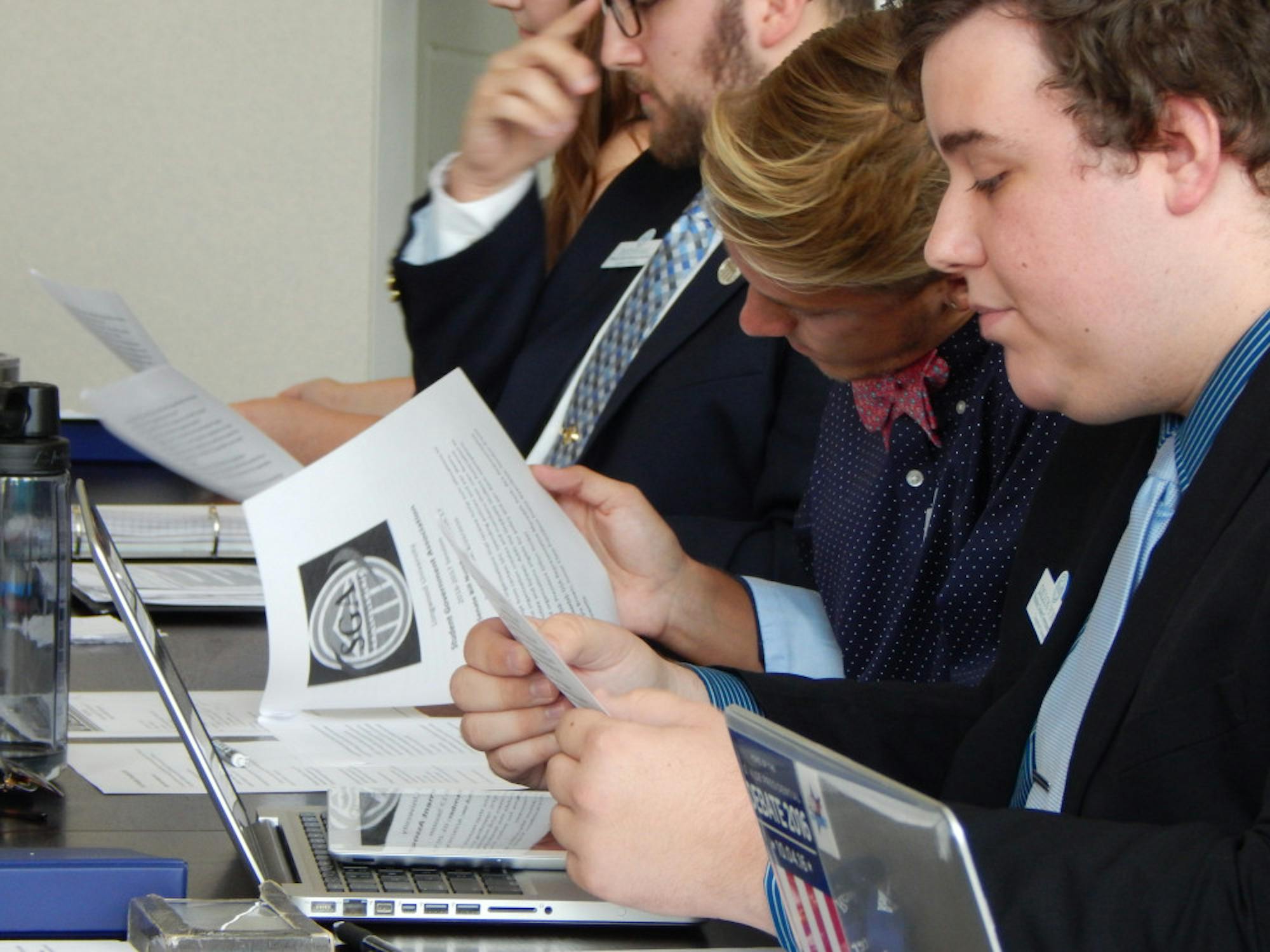
President Dillon Yonker (right) and the executive board read about the new GSA bill at their meeting on Aug. 30.