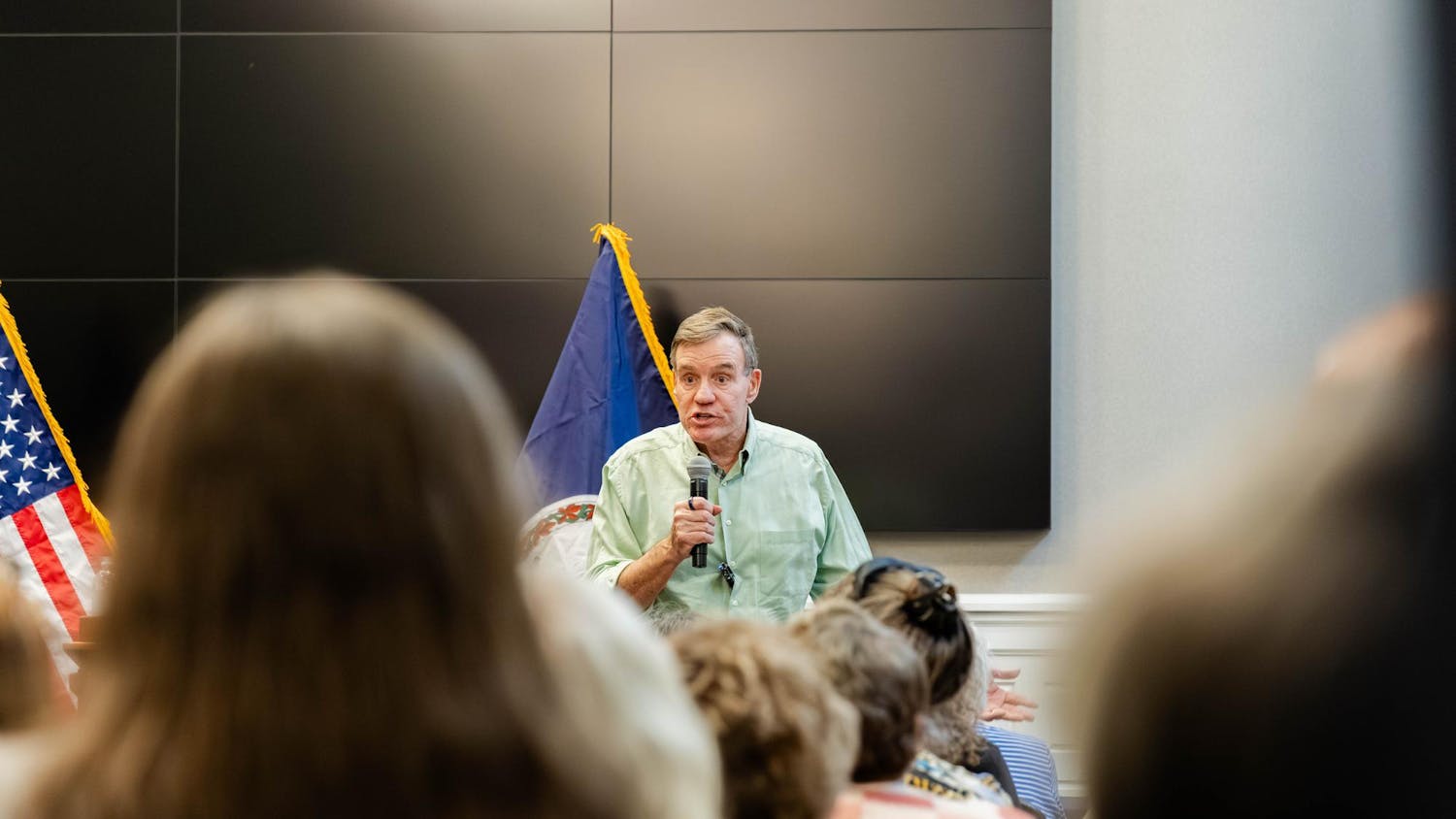
Wednesday, Nov. 2 marked the final "Wednesdays with Women and Gender's Studies" presentation of the fall semester. The event, entitled "When Everything Changed: Oral Histories of Virginia Women," took place in the Janet D. Greenwood Library at 3 p.m. The program featured a panel discussion with three students — Jessica Blanton, Nicole Hancock and Alyssa Foley — as a part of Associate Professor of History Dr. Larissa Smith Fergeson's HIST 321 course, the History of Women in America.
Dr. Carl Riden, associate professor of sociology, took a minute to plug the program, saying if any students are interested in a Women's and Gender Studies minor to come and see her. She also asked those pursuing the minor but who have not yet declared it to kindly do so, so they have an idea of who is interested.
Fergeson discussed the project and the in-depth research the class has been conducting. The focus of the research assignment is to do an oral history with women born before the 1960s and put that woman's life in context against modern American life. "The goal is to use this woman's life to personalize the broader changes that have happened in the last 30-40 years," Fergeson said. She stressed the importance of giving an experience of using oral history as a historical source.
Fergeson said this semester she "flipped" the course. When she taught the class in the past, she found it was difficult to talk about the role of women's history post-1960 due to time constraints. She said much of the material discussed is focused around colonial women's history and little time was spent on history of the modern woman.
Most of the students in the class interviewed relatives, but Ferguson encouraged students to interview women at Longwood. Since the university switched to co-ed in 1976, there are many faculty and staff and some alumni on campus who can recall the transitional period.
Fergeson gave a brief account of women's history at the university, showing how women transformed from students into faculty members and eventually into positions such as dean of students and eventually even president. She used yearbook records to help show how women also worked in administrative positions and as "head residents," synonymous to today's resident assistants, in residence halls.
At Longwood in 1969, out of 65 female faculty positions, 16 had a PhD. In 1973, out of 55 female faculty members, 21 had a PhD. Even though the percentages increased, women were still below men when it came to holding a PhD. However, many women in 1973 were on track, working toward a degree and had credentials to teach but had yet to complete a dissertation.
Common with oral histories, students in the class audio recorded their interviews. Blanton interviewed Dr. Martha Cook, professor emerita of English, who retired three years ago. Blanton said that Cook noted the differences in the dining hall when the college became co-ed. She joked that men would get the food first, and women were often left hungry. Cook also mentioned in her interview how the dress had changed as women were beginning to impress the men on campus. Blanton said she learned before that many women often wore pajamas to class.
Hancock talked to Dr. Susan May, professor emerita of English, who discussed the differences within the Department of English and Modern Languages. She said there were eight male faculty members and seven female faculty members. May was very instrumental in forming the faculty relations board at the university which would later become the Faculty Senate.
Co-Assistant Honors Director for the Cormier Honors College Ms. Susan Bagby was also interviewed as part of the project by Foley. Foley said she directed her interview toward Bagby's work in the Prince Edward County school system for four years after her husband received a job at Hampden-Sydney College. Bagby came to Longwood in the 1980s as a part time adjunct, a position she would continue to hold.
On how Longwood has changed in the past 40 years, Blanton said one of the things Cook focused on was the architecture. She noted how many of the buildings had changed shape or how new buildings had been constructed.
Bagby, according to Foley, added how Longwood was in a "bubble." She said there used to be no real connection to the town. Now, students volunteer on a daily basis in the community and work at bettering the relationship between the university and the town.
Blanton said she found that oral history is more of an individual opinion of what happened compared to the complete facts.

"People do remember things differently," Fergeson added. Other students in the class noted how family members tend to add what they call "interested details and answers" that are possibility, not full-fledged honesty.