According to an January 2008 article on MSN.com, The Project on Student Debt estimated that the average college student will graduate with $21,000 in educational debt. WhyLongwood.com estimates that the average annual tuition, fees, and room and board at Longwood (14 meals per week plus $150 per semester and 30 credit hours per year) comes out to be $15,358 for Virginia residents. As part of that cost, one of the fees students pay is a comprehensive fee of $3,990.
The budget breaks down into two basic divisions. There is the educational and general (E&G) side and the auxiliary side. The E&G side is made up from tuition, state funding and class fees. The auxiliary side is made up from the comprehensive fees, parking fees, and room and board and includes all the services that have to pay for themselves.
State law mandates that everything for the auxiliary part of the budget has to be paid for through revenue. This is also considered the "user fee," which is paid by the people who use the facility. The state only provides 34 percent of the budget. The rest has to be made up through other fees.
E&G pays for the assistant dean, campus police, dean of students, disability services, multicultural affairs, vice president of student affairs, and the volunteer and service leaning program. Auxiliary pays for the recreation center, intramural sports, student health, student union, transportation, phone services, housing, commuter student lounge, and honor and judicial programs. It also pays for the upkeep of the auxiliary buildings and utilities. To compensate for extra costs, when the school constructs a new building they get a 20-year bond. The school still has debt on the dining facility, recreation center, parking garage, athletic fields and improvements to Willett Hall, part of which is paid from the comprehensive fee each year.
"Compare us to JMU or Tech. We have fewer students, but we want to offer the same services," said Kathy Worster, vice president for administration and finance. "If Virginia Tech adds $1 to each student's comprehensive fee, they just got $25,000. If Longwood adds $1 to each student's comprehensive fee, then they get around $4,000," she added.
"It's been estimated that a student spends 80 percent of their time outside of a classroom. Our goal is for you to have a successful career here. All of these services are to help you succeed. Your physical and emotional health is all important. Everything needs to be clicking," said Tim Pierson, vice president for student affairs.
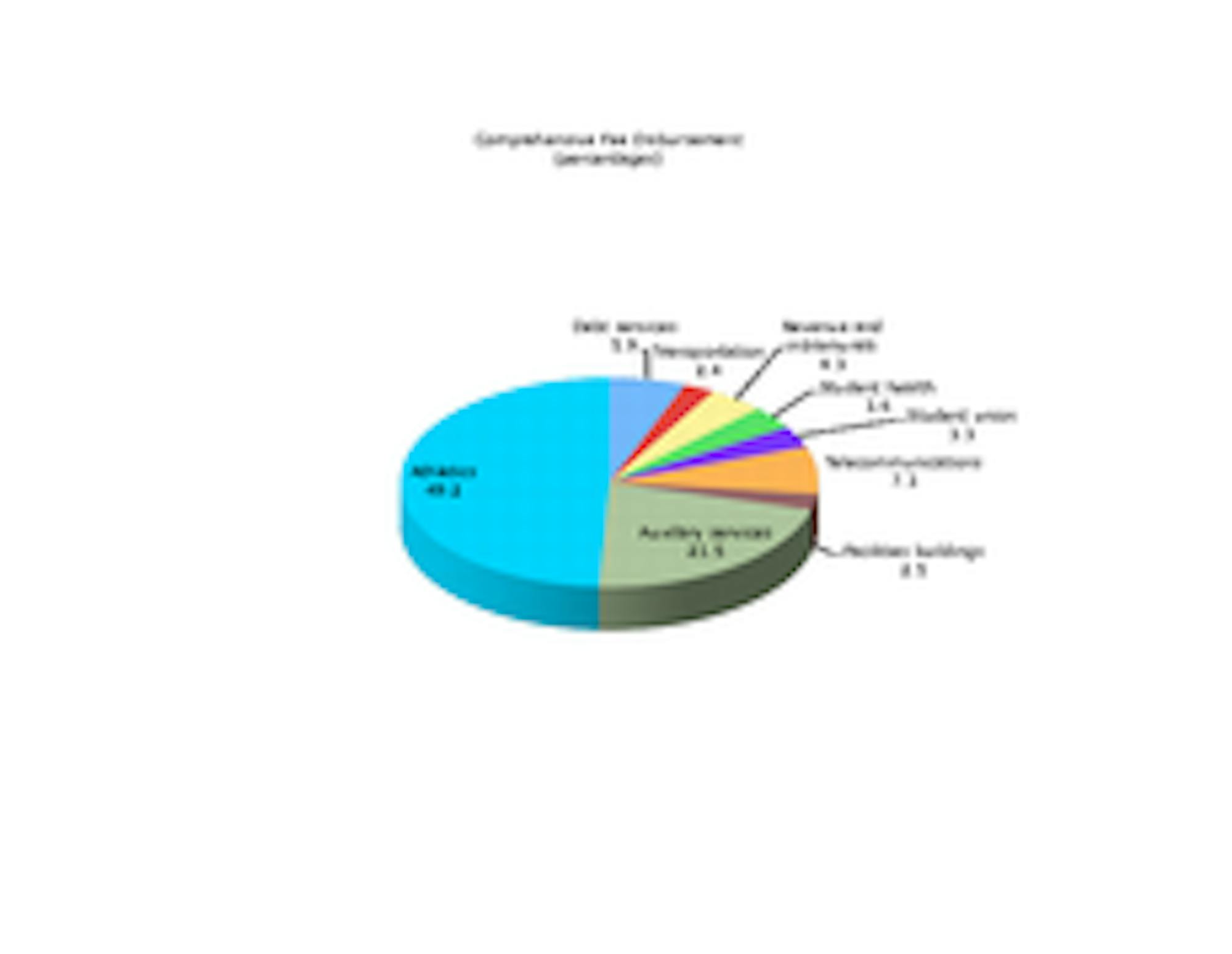
The breakdown of the comprehensive fee shows all of the different areas the money goes to: debt services takes 5.9 percent, 2.4 percent goes to transportation, revenue and intramurals receive 4.3 percent, student health gets 3.6 percent, 3.3 percent is given to the student union, telecommunications gets 7.3 percent, facilities buildings receives 2.5 percent, 21.5 percent goes to auxiliary services, and athletics takes the largest amount, at 49.2 percent.
The money going to athletics has to pay for coaches' salaries, administrative staff, facilities and fields. It also pays for scholarships and traveling expenses.
Athletics at Longwood is not a moneymaker. Competing in Division I is expensive, but Wayne McWee, vice president for academic affairs ,feels like the money is worth it. "Athletics enhance the perception of Longwood; this enhancing the value of your degree," said McWee. He added that not many students would want to go to a school without an athletics program, therefore making the program somewhat of a necessity to continue attracting students.
One of the changes that came with the Division I classification was paying for charter buses to take athletes to and from games. Before, McWee said, the coach and one of the athletes would drive vans to the games. The coach and athlete would have to drive during the night to get back to campus in time for classes. Now, with the charter buses all of the players can do homework and sleep during the ride back.
"The president and I, we like to win. More importantly, however, we want every athlete to graduate; their degree is going to get them a job. They need to graduate," said McWee.
"Our biggest goal is to have the best facilities to help for a broader experience. We do this all for the students. If it wasn't for the students, none of us would be here," said Worster.
"The comprehensive fee's duty is to put key services into place. These services round out the college experience. If you just went to classes, you could go to school online at the University of Phoenix. Comprehensive studies have been done on social and educational collegiate experiences. Those with a more well-rounded experience were better prepared," said Pierson.